

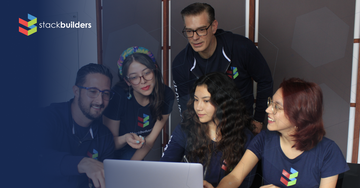



In November 2025, we presented two talks at DevFest Ecuador:
- The Silent Killer of Software Projects: Poor Communication
- Risk Management 101: How We Anticipate and Mitigate Project Dangers
In this blog post, we dive into the second talk and explore how effective risk management can help you identify potential challenges early, respond with confidence, and turn possible future problems into concrete solutions.
Risk Management 101: How We Anticipate and Mitigate Project Dangers
As project managers, we often discuss the visible challenges of our work, such as scope creep, tight deadlines, and unexpected technical hurdles. But the true danger to a project’s success, much like an iceberg, lies in the 90% that remains hidden beneath the surface.
We define this hidden element as risk. It is not a catastrophe, but an event that can generate negative impacts on a project, provoking delays, increasing costs, or harming the quality of the final delivery.
The art of risk management is not about predicting the future; it's about transforming potential future problems into concrete decisions we can make today.
The Four Zones of the Project Iceberg
To manage what you can’t see, you must first acknowledge its existence. We divide project risks into four distinct zones, based on their visibility and proximity:
The Visible Surface: Here, the team can clearly see the goals, product value, scope, and impact. Risks at this level are known and easy to address.
Under the Water: The light is dim, but you can still recognize possible problems, inconsistencies, or unaddressed questions from the planning stage.
The Latent Zone: This is the most crucial layer for a Project Manager. It hides risks that are rarely visible to the client or the core team. Experienced Project Managers can anticipate and communicate these threats clearly.
The Unexplored Zone: No one knows what truly exists here. These are the unforeseen events, the "nobody saw that coming" risks, like major cloud provider outages, that can manifest at any point in the project cycle.
Managing the Latent and Unexplored Zones requires a non-negotiable, recurring process. In an agile world, we prioritize functional software, constant collaboration, and perpetual openness to change to keep these risks contained.
Our Risk Management Framework: Four Pillars of Control
Our strategy for handling risks is built on four fundamental stages: Identify, Analyze, Plan, and Act.
Identify: Risk vs. Problem
Before you can manage a risk, you must differentiate it from a problem. A problem has already occurred; a risk is something that could occur. Identifying risks is not about alarmism, but preparation.
We categorize risks to better plan specific mitigation strategies:
Technical Risks: System failures, development errors, or infrastructure issues.
Personal Risks: Team absences, skill gaps, or, most critically, poor communication.
Project Risks: Scope changes, client delays, or unclear expectations.
Good identification practices include brainstorming sessions with the entire team and maintaining a running “Risk Register”.
Analyze: Probability, Impact, and Proximity
Once a risk is identified, we define its overall uncertainty by weighing three factors:
Probability: We estimate the likelihood of occurrence using a simple, practical scale (Low, Medium, High).
Impact: We quantify the potential loss on measurable aspects, such as budget (e.g., $10,000 cost increase), quality, or delivery times.
Proximity: How soon could the risk occur? Even a low-impact risk becomes critical if it appears right before a key project milestone.
Plan: The Strategies for Mitigation
With a clear understanding of the risk, we define a management strategy:
- Eliminate: Prevent the risk from occurring from the outset.
- Reduce Probability: Take actions to make the situation less likely to occur.
- Reduce Impact: Minimize the consequences, ensuring costs or deadlines are not drastically altered.
- Create a Contingency Plan: Organize a strategy to implement continuous monitoring and minimize the impact if the risk is triggered.
- Accept: A last resort where the impact is analyzed and accepted. This strategy requires a clear understanding of what will be sacrificed.
Act: Documentation and Follow-Up
The final stage is consistent documentation and follow-up. The Risk Register allows the team to recognize current and future risks and anticipate similar situations. Knowing the risks doesn't eliminate them, but it provides clarity and ensures all stakeholders understand what is at stake, leading to informed decisions.
Real-World Risk Management in Action
Taking theory into practice, we apply three core principles in complex industries, ranging from big data to cybersecurity and biotech.
Principle 1: Total Visibility and Smart Communication
Every risk that isn't discussed only grows larger. We maintain visibility through tools like Notion, Slack, and recurrent reviews, especially when the risks are small or uncomfortable. We promote proactive communication, preferring to alert early and align expectations rather than falling victim to the phrase, “we saw it coming, but didn’t say anything”.
Principle 2: Data Over Intuition
We make decisions based on real data, not guesswork. Before committing to a date or scope, we analyze the team's velocity, external dependencies, technical capacity, and history of bugs. When decisions are data-driven, you reduce the risk of overpromising and under-delivering, which is a crucial advantage in consulting.
Principle 3: Redundancy - The Antidote to Single Point of Failure
Relying on a single expert for a critical module is like building a bridge with one column: it works until it doesn't. This single point of failure is a severe operational risk.
We mitigate this by building smart redundancy, without overworking the team:
- Creating clear, accessible documentation.
- Facilitating continuous pairing sessions so more members understand critical modules.
- Structuring handovers before vacations or role changes.
- Redundancy is one of the most effective ways to protect a project long-term, reducing stress and eliminating blockages.
The Ultimate Transformation: From Risk to Opportunity
We don't view risks as purely negative. When observed with intelligence and humility, risks are signals that something needs to grow, improve, or transform. The strongest projects we've built have emerged because a risk forced us to think differently.
Examples of risks that turned into opportunities:
- A technical bottleneck in the Big Data and research industry forced a refactor, leading to a system that now scales 10x faster.
- A critical bug in the cloud communications industry created the opportunity to automate regressions and dramatically improve quality.
- An external system in the biotechnology industry caused a dependency that was unstable, motivating us to design fallback systems that are now a competitive advantage.
- An incident in the automotive industry created a more honest conversation with the client, strengthening the relationship.
If we can observe risks intelligently, they can become the very foundation of the next high-performing system.
Conclusion: Building Resilience, Not Perfection
Every project has risks. No framework can guarantee an absence of unexpected changes or bugs. The goal is not to avoid risks, but to make informed decisions about which risks we are willing to assume with each step, and to accept them.
Projects are not built by avoiding risks. They are built by observing, understanding, and transforming them into opportunities for sustainable growth, resilience, and culture.
If you’re ready to approach risk with clarity instead of fear, Stack Builders can support you with product discovery, Product Management, Project Management, and delivery governance services that bring structure, visibility, and strategic guidance to every stage of your project, so you can make confident decisions and build with resilience.