







The Project Manager role (PM) is evolving from coordination and towards primarily strategic orchestration as software development is increasingly adopting AI. This article explores how AI is transforming project delivery across three levels:
- Foundational automation of requirements and discovery,
- Augmentation of Agile methodologies through predictive analytics.
- Emerging agentic systems (proactive risk detection and simulation).
AI is not only accelerating existing tasks, it has begun to reshape how projects are planned, monitored, and adjusted. Nowadays, organizations have the opportunity to improve delivery predictability, enhance decision quality, and enable PMs to focus on leadership, strategy, and complex problem-solving by standardizing these AI-assisted workflows.
I. Introduction: The Delivery Revolution and Research Imperative
A significant portion of a project manager’s time has traditionally been consumed by administrative work, including documentation, drafting requirements, scheduling and summarizing meetings, status reporting, and backlog maintenance. Today, these tasks are increasingly being automated or augmented by AI, allowing teams to move faster while improving consistency, visibility, and redefining the role of the project manager. By using AI correctly, PMs are now able to spend more time on strategic decision-making, stakeholder alignment, leadership, and complex problem-solving rather than focusing mainly on manual coordination.
Despite their growing availability, most organizations are still relying on a disconnected usage of AI project management tools rather than a structured, scalable delivery approach. However, the real opportunity lies in adopting a standardized AI-enabled delivery framework, moving project management beyond reporting what happened and into predicting what is likely to happen, enabling earlier and better decisions.
AI implemented effectively in project delivery can shorten the path from idea to execution and elevate the strategic impact of PMOs in an increasingly complex and fast-changing business environment.
II. Phase 1: Foundational AI – Automating the Project Lifecycle
AI integration would begin with the foundational automation of the project lifecycle's "input" phases. Because predictive models depend heavily on data quality, establishing clean, structured inputs is essential.
1. Requirements and Ticket Generation
A primary source of scope creep and information degradation has been the manual translation of unstructured stakeholder meetings into structured technical tickets. AI now serves as the semantic bridge in this process.
Meetings Transcription and Analysis: PMs can now convert audio or text from unstructured meetings or sessions into structured data using AI integrated communication platforms (e.g., Slack, Meet, Teams). AI can help automatically with live language translation, transcriptions, and identifying action items. Furthermore, with proper prompting, AI can recognize technical dependencies, suggest appropriate labels/components, and set initial priority levels based on the project's critical path. While human validation remains essential, this reduces information loss and accelerates backlog creation.
- Automated quality checks: AI sometimes highlights vague requirements or overly large stories; for that reason, prompting refinement is key before they enter the sprint backlog. A critical standardization step is the quality audit. Every AI-generated user story should be instantly audited against the INVEST criteria (Independent, Negotiable, Valuable, Estimable, Small, Testable).
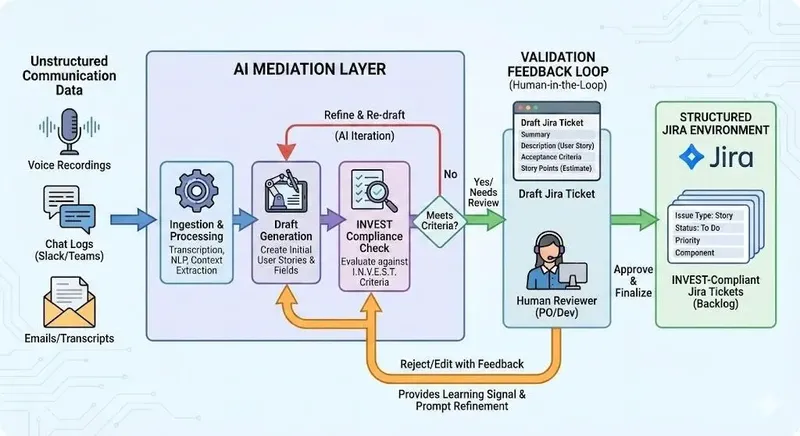
Figure 1 - Unstructured communication to INVEST Jira tickets.
[Description: A flow diagram illustrating the transformation of unstructured communication data (voice/chat) into structured, INVEST-compliant Jira tickets via an AI mediation layer, showing the validation feedback loop.]
2. Accelerating Discovery with Generative Prototyping
A bottleneck in traditional delivery is the lag time between requirement definition and visual validation, but now, we have generative design tools by platforms like Figma AI, which allow rapid prototyping for PMs.
PMs can now utilize text-prompts to generate high-fidelity UI wireframes. By describing a feature (e.g., "A mobile settings page with 2FA toggle, dark mode switch, and biometric login options"), AI generates initial visual structures and adapts to comments or suggestions quickly. This allows stakeholders to validate the concept visually before engineering resources are committed.
Furthermore, advanced AI integrations scan generated components against the organization's established Design System. This allows even PM-generated prototypes to adhere to brand guidelines and component libraries, reducing "design debt" downstream.
III. Phase 2: Redefining Methodologies – Augmented Frameworks
As AI becomes embedded in delivery tooling, traditional Agile frameworks are being augmented with data-driven insights. These approaches do not replace Agile principles but enhance them with probabilistic forecasting and continuous analysis.
1. Augmented Scrum: Supporting Planning and Adaptation
Scrum has relied on human intuition for estimation and planning. Augmented Scrum integrates predictive analytics into these ceremonies as a decision support layer.
- Augmented Scrum provides the possibility to use predictive estimation modeling. AI can provide confidence ranges for delivery rather than single-point estimates by analyzing historical velocity, backlog characteristics, and codebase signals such as change frequency or complexity indicators, reducing recency and optimism bias.
- Another important tool in Augmented Scrum is an emerging “Virtual assistant”. An autonomous background agent that continuously monitors sprint health metrics and signals such as scope changes, unplanned work, or blocked items, and presents trade-offs for the team to consider. Final decisions remain human-led, but with better visibility into potential consequences. One tool for PMs that can integrate AI agents is within Asana, called AI Teammates.
“Asana AI Teammates helps us to securely unlock the institutional knowledge within our work data, generating data-driven insights that inform critical business decisions. In one use case, it completed weeks of complex research in hours. This helps to evolve how our teams operate and supports our ability to deliver results at scale.” (Kohl, Laura, for Asana, 2025)
2. Augmented Kanban: Mastering Flow Efficiency
Kanban’s strength lies in flow visualization. Augmented Kanban extends this by applying queuing theory and historical data to anticipate bottlenecks or congestion.
- Adaptive WIP guidance: Instead of static limits, AI-supported systems can recommend temporary adjustments based on capacity changes or rising cycle times. If critical team members are absent or if cycle times in a specific column begin to degrade, the AI can automatically suggest lower upstream WIP to prevent system overloading.
- Early bottleneck detection: By continuously evaluating arrival rates and cycle times, predictive models can highlight areas where work is likely to accumulate, allowing teams to intervene earlier.
One of many examples of these tools can be found in ClickUp with their AI “Super Agents,” which are strengthening these features. One of the super agents you can get is the Priorities Manager, who continuously manages priorities, escalating and identifying urgent tasks.
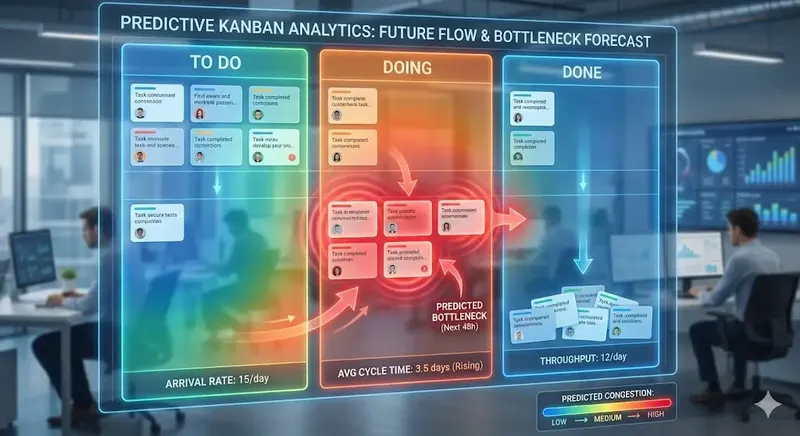
[Figure 2 - Kanban AI-assisted early bottleneck detector]
[Description: A Predictive Kanban board visualization. It shows standard columns (To Do, Doing, Done) but includes "Heat Map" overlays indicating predicted future congestion points based on current arrival rates and cycle times.]
Closing Notes
With Foundational AI automating the project lifecycle's initial stages and Augmented Agile frameworks enhancing predictability and flow efficiency, we have established a new baseline for project delivery. However, the most profound transformation is still emerging.
Coming soon, in Part 2 of this article, we will explore the cutting-edge of AI in project management: the rise of Agentic AI, its advanced capabilities like autonomous risk mitigation, digital twin project simulation, AI good practices, and the essential new skillset Project Managers need to lead in this evolving landscape.