





Most designs look perfect in Figma, but they break the moment they hit the browser. If your developers are constantly telling you "we can’t build that", or your designers feel their vision is being "stripped down", you don’t have a talent problem; you have a partnership problem.
For too long, the industry has relied on the waterfall handover, where a design is "finished” before an engineer ever sees it. At Stack Builders, we’ve moved to a collaborative partnership model. We believe the best products aren't "handed over," they are co-created from the first kickoff.
In case you missed it, you can also check our last blog to learn more about high-impact UX.
The Value of Early Collaboration
When user-centric design and system-centric engineering collide early, productivity actually increases. Taking two different sets of knowledge and working collaboratively from the early stages will improve implementation substantially.
Instead of a linear process, we advocate for Concurrent Collaboration. By involving engineers in discovery and designers in technical spikes, we find the "sweet spot" of product development:
- Design informs Engineering: Ensuring the technical architecture can support the long-term user vision.
- Engineering informs Design: Providing creative constraints that prevent wasted cycles on non-feasible features.
The Paradox of Simplicity
Early collaboration also ensures that we make a product feel effortless, which is normally remarkably difficult. It requires shouldering the complexity on behalf of the user and moving the heavy lifting from the interface to the underlying architecture.
- First Impressions are Design-Driven: Users form an opinion about a product in as little as 50 milliseconds, and 94% of that first impression is design-related.
- The Cost of Friction: Around 90% of users have stopped using an app or website purely due to poor performance or clunky interactions.
When design and engineering collaborate from Day 1, they ensure that simple doesn't mean limited. They build systems that handle massive data complexity while presenting the user with only the most elegant, intuitive path forward.
Our Use Case: Engineering a Shared Source of Truth
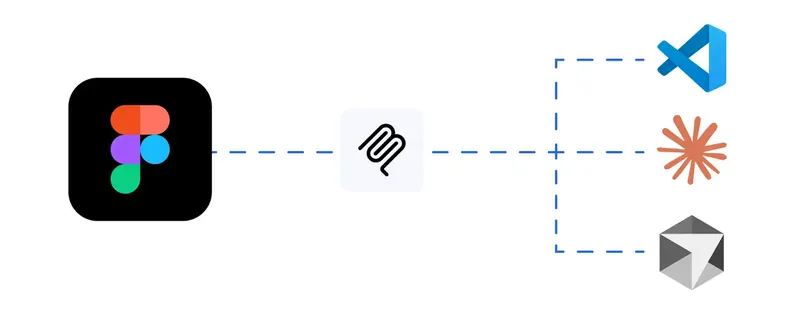
We are currently implementing an up-to-date design system where the bridge between departments is a live data pipe, not a static document. By utilizing Figma’s Model Context Protocol (MCP), we allow our development environment (IDE) to talk directly to Figma’s structured data.
Our Integrated Tech Stack:
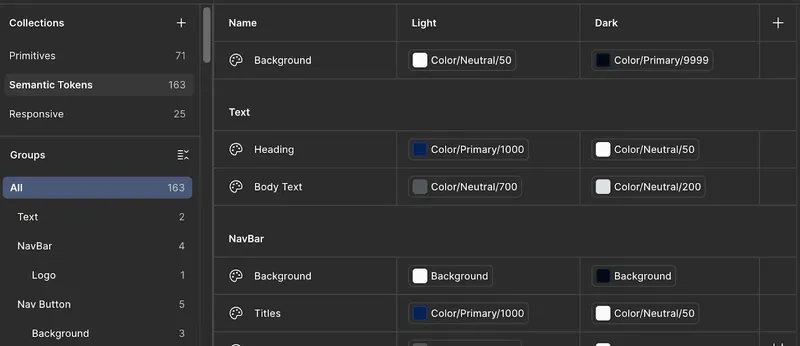
- Shared Primitives & Tokens: We define raw values (color, spacing) and set up multiple design tokens that are carefully thought out and planned. We can then take those primitives and sync with the dev environment, manually first, and then automate the process. When a designer adjusts a variable in Figma, it is instantly available as an update in the code as well.
- Bespoke Component Library: We build custom components that encapsulate both the design’s visual intent and the engineer’s logic for accessibility and state management.
- AI as a Shared Assistant: With Figma MCP, our AI-assisted coding tools can query the design system directly. This has the potential to reduce manual design interpretation tasks by up to 85%.
The Human-in-the-Loop: Why Structure Still Wins
While tools like MCP and AI act as accelerators, they don't replace the need for expert human judgment. In fact, they make a well-structured design file more critical than ever.
AI can generate a thousand layouts, but it cannot understand user frustration. AI is only as good as its context, so when we have a messy Figma file, it leads to "hallucinated" code.
The designer’s new role is as a System Architect, ensuring that every Auto-Layout and naming convention is production-ready. Meanwhile, the engineer acts as the Audit Authority, ensuring that AI-generated code meets rigorous performance and security standards.
The Result: We use AI to automate the repetitive "CSS guesswork," freeing the human partnership to focus on solving complex user problems.
Atomic Design: A Shared Mental Model
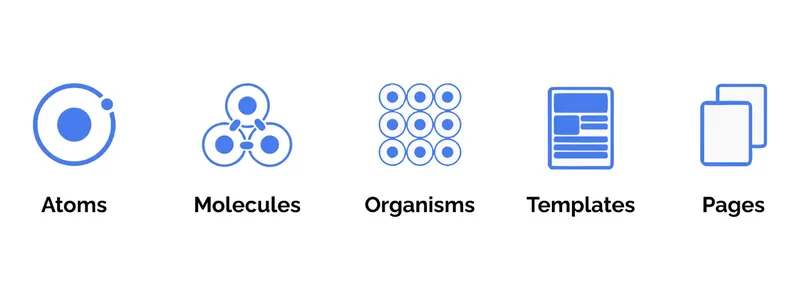
To maintain this balance, we use Atomic Design as our shared vocabulary.
- Foundations: The basics of how our design system works. Here we can find the typography, color palette, spacing specifications, and more.
- Atoms: The smallest building blocks (Logos, icons, or custom buttons).
- Molecules & Organisms: Complex UI patterns (Navigation bars, Data Tables) created by combining basic elements, where design vision and technical implementation meet.
- Templates: Page-level structural blueprints (layouts) that arrange these patterns to define the content structure.
The Synergy of Intent
Building a product that feels effortless isn't the result of lucky design or clever code; it’s the result of early, constant collaboration and refusing to work in isolation.
This effortless experience is only possible when design and engineering speak the same language. By using Figma MCP to create a live data pipeline and anchoring our work in a robust Atomic Design system of custom components, we ensure the "Source of Truth" is never lost in translation.
However, these tools are only accelerators. AI can speed up parts of the process, but it does not replace the design stage or the hard work of understanding user needs, business priorities, and the feasibility and cost of potential solutions. They increase the need for experienced designers and developers. When you stop fighting the medium and start mastering the partnership, you stop building software and start building experiences.
Effortless design isn't just a goal; it's a financial strategy. If you’re ready to bridge the gap between vision and execution in your own product, explore how our Design Services integrate these cutting-edge workflows into your use case.
In our next part of the series, we’ll dive beyond the aesthetics to see how these intentional decisions translate to growth.
Subscribe to our blog to get the latest updates from our team!